Begin with the work the website must do
The choice between WordPress and a custom application is often presented as a contest between two technologies. A better starting point is the business: what information changes, who changes it and which tasks visitors need to complete.
List those tasks before choosing the stack. A service website with articles and project stories has different needs from a product with complex permissions, unusual data relationships or a specialist operational workflow. The same visual design can also be delivered through different technical foundations.
Where WordPress provides a useful starting point
WordPress includes publishing, media management, user roles and an editing environment that can be extended for structured content. Those capabilities can reduce the amount of standard administration a team needs to build from scratch.
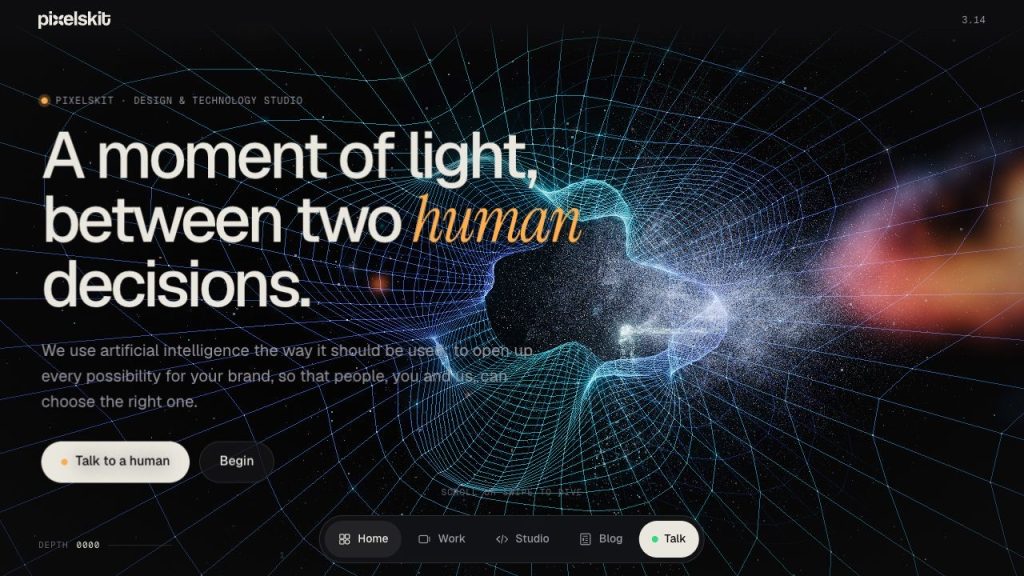
A custom theme can still give the public website a distinctive design. Our own immersive experience uses WordPress for its content while JavaScript owns the scene and camera behaviour. Choosing a CMS does not require choosing a generic public template.
The important question is whether the editing model matches the content. Services, projects and articles should have understandable controls. If every change requires navigating a fragile collection of unrelated plugins, the apparent convenience of a familiar platform can become expensive to maintain.
Where custom development earns its cost
Custom software becomes attractive when the essential workflow does not fit the assumptions of an existing platform. A specialist client portal, a product with unusual state changes or a system that joins several operational processes may need its own application model.
That freedom comes with responsibilities. Someone must design and maintain authentication, permissions, data validation, backups, upgrades and administration. A custom application is not automatically simpler because its public interface looks small.
A useful proposal explains which parts are being reused, which parts are being written and who will own the ongoing work. That makes the trade-off visible before development starts.
Compare the full period of ownership
The initial build is only one part of the cost. Consider hosting, software licences, updates, support, content entry, integrations and the effort required when the business changes direction. Ask what happens when a staff member leaves or the original developer becomes unavailable.
For WordPress, review plugin ownership and update practice. For a custom application, review dependencies, documentation and deployment access. Both routes need tested backups and a practical recovery plan. Neither becomes secure or maintainable solely because of its category.
Ask to see the editing journey
Before approving the foundation, walk through a realistic content change. Add a project, replace an image, correct a service description or update an article. If those are regular tasks, the people doing them should understand the process.
Also discuss what the chosen approach will not do in the first release. Keeping optional features out of the initial build can make either route more focused. A smaller system that reliably supports the important tasks is easier to learn from and improve.
The right foundation is the one whose strengths match the work and whose ongoing responsibilities the business can support. Sometimes that is WordPress, sometimes a custom application, and sometimes a carefully defined combination of the two.